

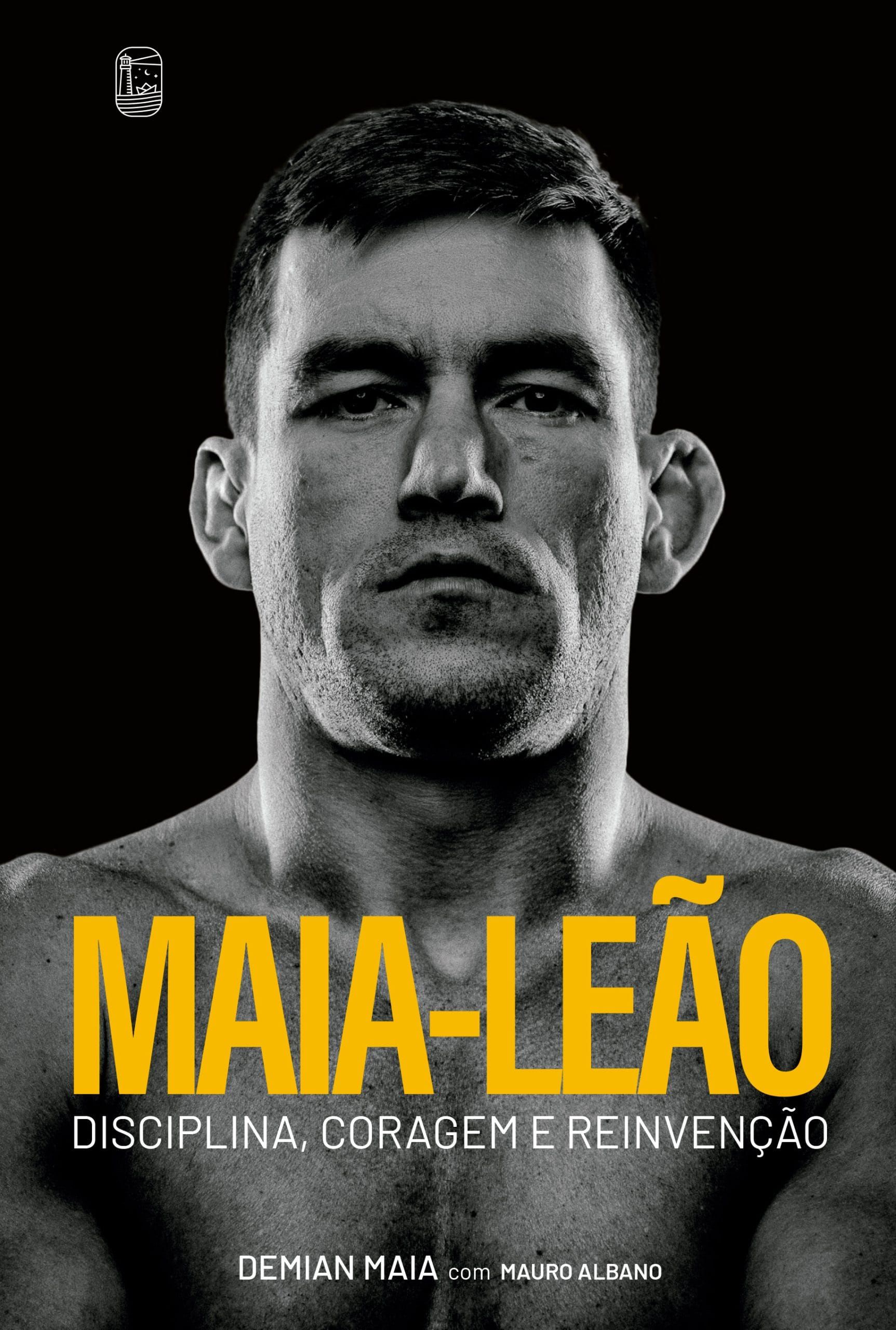
Demian Maia spent years pursuing a UFC championship. He challenged for the middleweight title in 2010, returned to contend for welterweight gold in 2017 and built one of the longest careers in the promotion without ever securing the belt.
Now 48, Maia looks back at that unfinished goal from a different distance.
In an interview published September 17 by Folha de S.Paulo, Maia said the reach of his jiu-jitsu ultimately mattered more than the championship he did not win. The interview accompanied the release of his first book, Maia-Leão: Disciplina, Coragem e Reinvenção, written with Mauro Albano and published by Editora Alamiré.
Maia did not pretend the UFC title was unimportant. He wanted it. But he also explained that a championship without the deeper connection he built through jiu-jitsu, including the chance to influence students and help transform lives, would not have carried the same value.
That distinction turns a familiar sports question on its head.
THE CHAMPIONSHIP HE DID NOT WIN
Combat sports usually organize a career around the belt. Athletes are introduced as champions, former champions or contenders who fell short. Everything else becomes context.
Maia's record fits that structure neatly. He earned two UFC title opportunities in different divisions and lost both decisions, first to Anderson Silva and later to Tyron Woodley. Those defeats remain part of his résumé.
But they do not explain why Maia became one of the most important jiu-jitsu representatives in modern MMA.
Across 33 UFC appearances, Maia made his grappling identity the center of his work. He was not a jiu-jitsu athlete trying to disguise himself as something else. Opponents knew what he wanted, audiences knew what he wanted and Maia kept finding ways to make that approach function inside the cage.
For a generation of viewers, that made his fights an introduction to positional control, back takes, body triangles and the patient pursuit of a finish. Winning mattered, but so did showing that high-level jiu-jitsu could remain recognizable after it entered MMA.
THE LEGACY HE DID BUILD
Maia's comments are not an argument that championships do not matter. They are an argument that a career can produce something valuable beyond the championship.
He has continued teaching through his academy, seminars and coaching. He has also remained connected to competition and has said he would consider a meaningful grappling match or one final MMA appearance under the right circumstances.
The new book gives that reflection a larger frame. According to the publisher, the 256-page memoir follows Maia through family life, financial difficulty, friendship, education and the long process of reinvention that accompanied his athletic career. Maia studied journalism before his fighting career fully took shape, and he told Folha that background helped him contribute actively to the writing rather than simply handing his story to someone else.
Even the title carries a piece of his technical identity. Maia-Leão is a play on mata-leão, the Portuguese name commonly used for the rear-naked choke. Maia explained that he had to adapt the technique for MMA because the gloves changed how he could connect his hands.
It is a small detail, but an appropriate one. Maia's career was built on adapting jiu-jitsu without allowing it to disappear.
WHEN RECORDS MOVE ON
The interview also offered a revealing moment about Charles Oliveira, the fighter who eventually passed Maia's UFC records for Brazilian wins and submission victories.
Maia admitted that before Oliveira surpassed him, part of him hoped Oliveira would win by knockout rather than submission. Once the records changed hands, however, he said they “could not be in better hands,” describing Oliveira as simple and humble.
Records are designed to be broken. The relationship between two athletes who recognize what those records represent can last longer.
That may be the clearest connection between Maia's view of Oliveira and the larger point he is making about his own career. A statistic can move to another name. A belt can be won, lost or never won at all. The people drawn into jiu-jitsu because of what an athlete demonstrated are harder to count.
MORE THAN THE BELT
Maia left with something less tidy and possibly more durable: a body of work that helped explain jiu-jitsu to millions of people who might never have watched a gi tournament or entered an academy.
The belt would have changed the way his career is summarized. It would not necessarily have changed the people who started training because they watched him, the students he continues to teach or the technical influence he left inside MMA.
Maia-Leão arrives as a memoir about that broader measure of success. The title points to a choke. The story behind it points to everything that remained after the fights ended.